
Read in 4 min
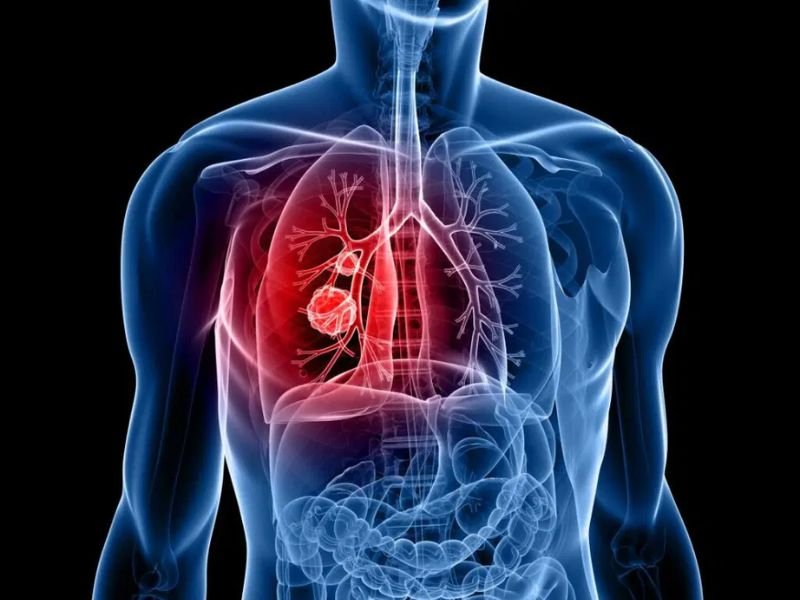
Taking care of your health is crucial in today’s world. Lung cancer is one such dangerous disease, often becoming serious due to late detection. Chest pain, persistent cough, or difficulty breathing are all early symptoms that can be treated promptly. Therefore, it’s crucial not to ignore these symptoms and to consult a doctor immediately. Lung cancer is a disease that eats away at the body from within, and by the time its symptoms become apparent, it’s often too late. People often postpone treatment out of shame, fear, or carelessness, but this is the biggest mistake. This disease can be cured if detected in its early stages, but if time is missed, it can be fatal.
Lung cancer is a disease that occurs when lung cells grow and develop uncontrollably. Our body’s cells grow and reproduce as needed, but when a defect (called a mutation) occurs, they continue to grow unchecked. This causes a tumor or lump to form within the body, which gradually damages the lungs and impairs their function.
This cancer begins within the lungs, specifically in the airways (bronchus or bronchioles) or air sacs (alveoli). If cancer from another organ spreads to the lungs, it is not considered lung cancer; it is considered local cancer—but rather, it is considered local cancer—but has spread to the lungs, which is called metastatic cancer.
The term “lung cancer” is used to describe two main types: non-small cell lung cancer and small cell lung cancer.
It is the most common form of lung cancer. Non-small cell lung cancer accounts for 80% of lung cancer cases. Adenocarcinoma and squamous cell carcinoma are the most common types, affecting the majority of people. NSCLC is a serious disease and is treatable if detected early.
Small cell lung cancer (SCLC) progresses much more rapidly than NSCLC, making it more difficult to treat. It usually begins as a small tumor in the lung, but by the time it’s detected, it has spread to other parts of the body. Small cell carcinoma and combined small cell carcinoma are the two main types of SCLC. Small cell carcinoma, also known as oat cell carcinoma.
Some other types of cancer can start in or near the lungs. These include lymphoma, which occurs in the lymph nodes, sarcoma, which occurs in the bones or soft tissues, and pleural mesothelioma, which occurs in the outer layer of the lungs. These diseases are treated differently. Although they occur near the lungs, they are not usually called lung cancer.
The stage of cancer is determined by its depth into surrounding tissues, the size of the initial tumor, and whether it has spread to lymph nodes or other organs. There are different stages of cancer staging.
Stage 0 (in-situ): Cancer is in the upper layer of the lung or bronchus. It has not spread to other parts of the lung.
Stage I: In this stage, the cancer has not spread outside the lung.
Stage II: In this stage, the cancer has spread to lymph nodes or there are multiple tumors in the same lobe of the lung. It is larger than stage I.
Stage III: It has spread to lymph nodes or structures that are larger than those in stage II.
Stage IV: In this stage, the cancer has spread to the fluid surrounding the heart or to distant organs.
Cancer treatment depends on the patient’s condition, health, and the stage of the cancer. Below are the treatments doctors use to treat lung cancer.
This may be a good alternative to surgery for people with non-small cell lung cancer. In some cases, chemotherapy or radiation therapy is given before surgery. This is also known as neoadjuvant therapy.
Radiofrequency ablation is used to treat NSCLC tumors. RFA uses high-energy radio waves to heat cancer cells.
High-energy rays are used to kill cancer cells. This is done to make surgery more effective. It is used to shrink tumors and provide pain relief. Radiation is used in both NSCLC and SCLC.
Chemotherapy is a combination of several drugs designed to stop cancer cells from growing. It is given before or after surgery, along with other medications such as immunotherapy. Chemotherapy is given for lung cancer.
People with NSCLC have specific mutations that cause the cancer to grow rapidly. Specific drugs target these mutations to destroy or slow cancer cells.
Immunotherapy is done to introduce the body’s immune system to hidden cancer cells, helping the body fight the cancer.
Lung cancer symptoms vary from person to person. Some people may not experience any symptoms at all. They may be mistaken for more common respiratory illnesses like bronchitis or pneumonia, delaying proper treatment.
The most common symptoms of lung cancer include:
If lung cancer spreads to other parts of the body, it may cause:
These symptoms are common and cannot be determined to be a sign of lung cancer. If you experience any of these problems, you should speak to your doctor immediately. Always maintain positive energy, positive thoughts, and maintain self-confidence.
Source:
Lung Cancer Types, Stages, Symptoms






Read in 4 min

Read in 4 min

Read in 4 min