
Read in 4 min
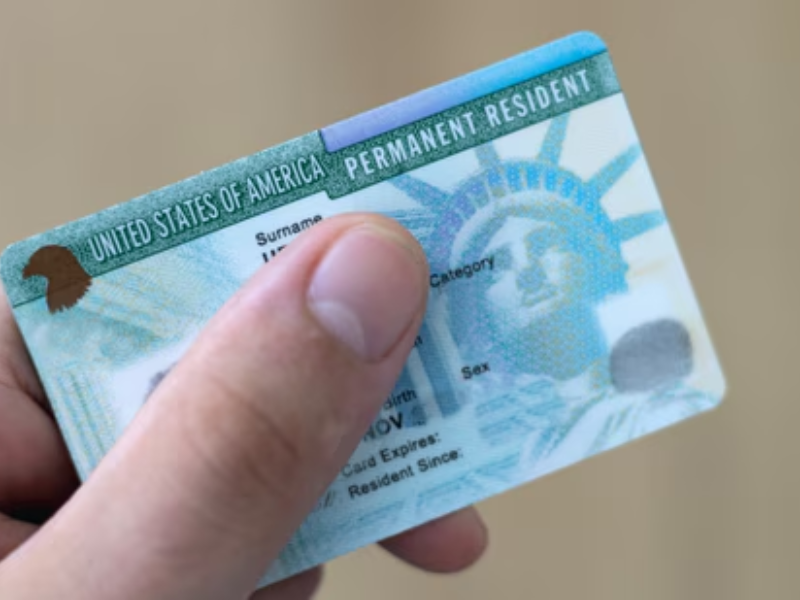
All You Need To Know About the US Green Card
If you want to live and do business in the United States, you must have a United States Green Card. Yes, a Green Card is an identification document that allows a person to live and work in the United States permanently. Many people desire this card because it gives them the freedom to live, choose their job, or work anywhere in the United States. The high quality of life, global prestige, and extensive benefits that come with obtaining citizenship are not easily attainable. Obtaining a US Green Card is a must – it requires meeting certain requirements. But if you understand the process properly and apply it with planning, this dream can become a reality.
There are many types of Green Cards according to their categories, which are as follows-
U.S. citizens and current green card holders can invite their immediate family members to the United States and apply for green cards (permanent residence) for them. These include spouses, children, parents, and siblings. If a person is the widow or widower of a U.S. citizen and was married before that person’s death, they can also apply for a green card. Cousins, aunts, uncles, and grandparents are not directly eligible for this card unless a close relative is already a U.S. citizen or green card holder.
In most cases, a job offer from a U.S. employer is required for application, but in certain cases, it is not required. For example, if an individual possesses exceptional qualifications in their field (EB-1 category), or if they can prove that their work is in the U.S. national interest (NIW) category, a job offer is not required.
Employment-based green cards are a good option for applicants wishing to work in the U.S. These green cards are issued in limited numbers. In case of a large number of applications, applicants are placed on a waiting list. A job offer from a U.S. employer is required for application, but in certain cases, it is not required. The main categories of employment-based green cards are as follows:
You can get this card for the following:
People facing persecution in their home country because of their race, religion, nationality, political views, or affiliation with a particular social group can apply to remain in the United States. This grants a person refugee or asylee status. Spouses, children, and in some cases, other family members can also participate in this process to gain protection and permanent residence.
Victims of human trafficking can apply for a T visa, which allows them to stay in the United States for up to four years. This visa requires victims to assist in the investigation or prosecution of human trafficking offenders, but this is not required if the victim is under 18 years of age. Three years after receiving a T visa, or after the investigation/prosecution period is complete, they can apply for permanent residence (a green card).
Victims of severe physical or mental abuse in the United States can apply for a U visa. To receive a U visa, their application must be certified by a law enforcement agency. Victims are required to assist in the investigation and prosecution of perpetrators. To receive a green card, they must reside in the United States for at least three years after receiving the U visa.
Victims of domestic violence or extreme cruelty can apply for a green card under the Violence Against Women Act (VAWA) without the knowledge or permission of their abusive relative. This law applies to women as well as men, parents, and children. The abusive relative can be a U.S. citizen or a green card holder.
The U.S. Green Card Lottery, formally known as the Diversity Visa Lottery Program, is a program under which the United States awards permanent residence (green cards) to approximately 50,000 people each year. The program primarily offers opportunities to citizens of countries with historically low immigration to the United States, such as Algeria, Lebanon, and Slovakia. Participants are selected at random.
You can apply for Green Card online through the steps given below-
Getting a green card for permanent and secure residence in the United States is not an easy process. Whether you’re applying through family, employment, the diversity visa lottery, or a humanitarian program, it’s important to be organized, follow the process carefully, and be patient.
If you’re applying for a green card, your costs may vary depending on where you live. Obtaining a green card provides benefits like legal permanent residence in the United States, access to Social Security benefits, easier travel and re-entry into the United States, and sponsorship opportunities for family members.
So if permanent residence in the United States is your dream, get started today. Gather your documents, learn the steps, and follow them one by one. Your future in America may be closer than you think.
Source:






Read in 4 min

Read in 4 min

Read in 4 min