
Read in 4 min
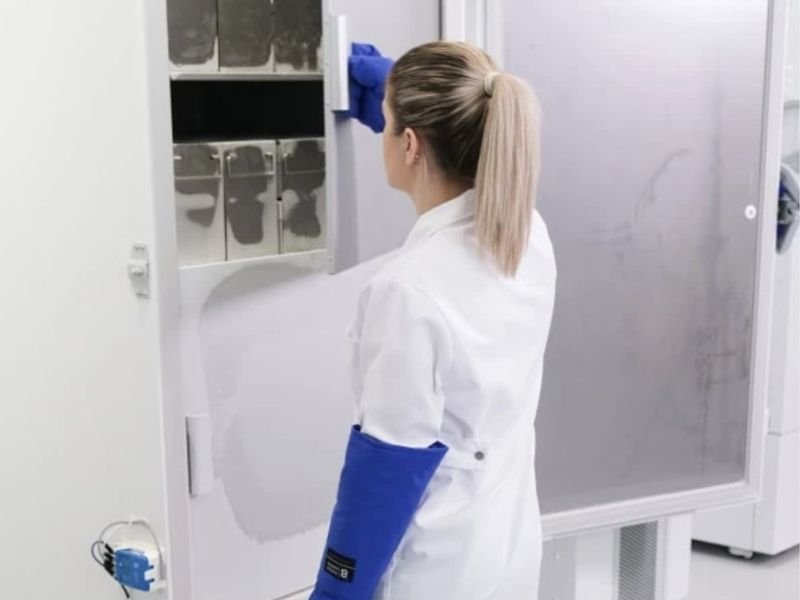
Ultra-low-temperature freezers have become a popular choice for storing biological materials in laboratories.
This is a special type of freezer, also known as an ULT freezer. It is used to store sensitive materials and biological samples at low temperatures. Its temperature can reach -80 degrees Celsius or below. These freezers are designed to maintain the viability of biological samples, including tissues, proteins, cells, enzymes, and other research materials, and to maintain low temperatures.
Ultra-low temperature freezers are used in the medical, scientific, and research fields. These freezers are essential for the long-term preservation of biological samples. Maintaining the stability of materials and preventing degradation allows researchers to store samples for long periods without compromising their quality. If you’re looking for information on ultra-low-temperature freezers, you’ve come to the right place. Here’s a guide to ultra-low-temperature freezers.
An ultra-low freezer is a type of refrigeration device used to preserve sensitive materials such as cells, tissues, organs, pharmaceuticals, and biopharmaceuticals at extremely low temperatures for extended periods. These freezers range from -20°C to -80°C or even lower. Some models can reach -86°C.
This technology is needed when scientists or pharmaceutical companies want to store or transport these materials for research, manufacturing, or life sciences. It has become an essential tool in today’s scientific and medical fields. It not only helps preserve medicines and biological samples, but also plays a vital role in vaccine distribution and life-saving research globally.
Ultra-low temperature freezers operate by using cooling systems and insulation to maintain low temperatures. Their primary components and mechanisms include:
Low-temperature freezers use advanced cooling systems based on cascade refrigeration technology. These freezers typically employ cascade refrigeration technology, which involves multiple cooling stages to progressively reduce the temperature. This process involves passing refrigerant (a special liquid or gas) through various parts of the freezer, such as the compressor, condenser, evaporator, and expansion valve, thereby removing heat from the freezer.
The interior of the freezer is insulated to reduce heat loss from the outside environment. High-quality insulation materials maintain low temperatures inside the freezer by reducing the cooling system workload. Foam and vacuum-insulated panels are all insulation materials.
This transfers heat from inside the freezer to the outside environment, causing cool air to circulate within the freezer. It maintains a low temperature in the freezer by absorbing heat from stored contents.
Ultra-low temperature freezers, such as these, have temperature controls that monitor the internal temperature to ensure it remains within the desired range. These systems utilize sensors, control algorithms, and feedback loops.
Compressors in the cooling system compress refrigerant gases, releasing heat. These gases pass through several stages, evaporate, and absorb heat from inside the freezer. The refrigerant then repeats this process and circulates it back into the system.
Many freezers are equipped with alarm and monitoring systems. These alert users in the event of a problem and help prevent damage to valuable specimens.
The interior of these freezers is designed with racks and shelving. This results in a smaller storage capacity, while also allowing for proper ventilation to maintain a consistent temperature throughout the freezer.
The above points demonstrate that the combination of components and mechanisms enables ultra-low temperature freezers to maintain biological samples and research materials at low temperatures for extended periods of time.
ULT freezers are used in the medical industry to store temperature-sensitive materials such as biological materials, cell lines, vaccines, and tissue samples at very low temperatures. The following are types of low-temperature freezers.
Chest ultra-low freezers (chest freezers)
ULT chest freezers are devices that resemble a typical residential or commercial deep freezer. They open from the top and have a lid and freezer door. They take up relatively more space, but are ideal for long-term storage of biological samples. Inside, racks and boxes keep contents organized and provide easy access. Chest freezers are useful for laboratories where large storage capacity is required and space is not a constraint.
Cold wall storage (upright ULT freezer)
Upright ULT freezers are ideal for long-term sample storage in laboratories. They resemble upright freezers used in restaurants and are available in one or two doors. They are suitable for areas with limited space but sufficient doors. These freezers are useful for areas with shelves along the walls. They often have an automatic defrost feature, shelves, and racks, making storage and access easy. Their design is convenient and space-efficient.
Other types include portable ultra-low freezers and convection-based models
Before buying an ULT freezer, you should know a few things to make an informed decision, which are as follows-
Ultra-Low Temp Freezers have many benefits, the biggest one being that it helps in storing medicines for a long time.
Freezing is the technique of preserving things at very low temperatures. It allows cells, tissues, organs, and medicines to be preserved for long periods of time. This method is superior to older methods because it preserves biological materials for longer periods, makes them easier to transport over long distances, and provides precise temperature control. Manufacturing and storing medicines today requires a highly efficient freezer. Therefore, when choosing a freezer, it’s important to consider its intended use—how often the door will be opened, what items will be stored inside, and its size.
Sources: Understanding Ultra-Low Temperature Freezing





Read in 4 min

Read in 4 min

Read in 4 min