
Read in 4 min
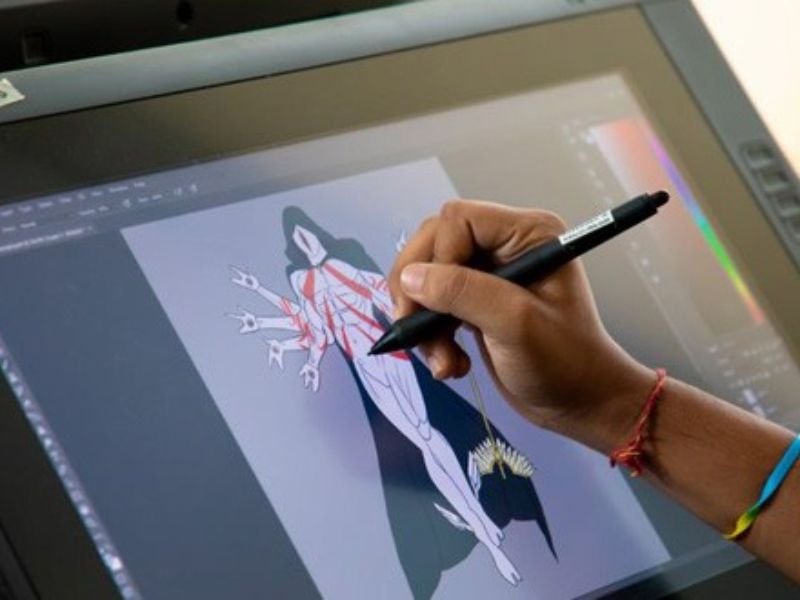
In today’s digital age, every field is rapidly advancing. Animation has become a field that plays a vital role not only in entertainment but also in advertising, healthcare, and many other areas. As animation’s popularity grows, the demand for skilled professionals in this field is rapidly increasing. This growing demand opens up new career opportunities for students in graphic design and animation. Becoming a successful animator requires creative thinking, technical knowledge, and dedication. Let us discuss today the types, courses, and scope of animation.
There are many animation courses available, each focusing on different topics. For example, if someone is interested in 2D animation, 3D modeling, or special effects, they should choose the right course based on their interests. Special attention must be paid to the course you select. This ensures students receive quality training in that area and can advance their career. The following are the course types, which you can choose from as per your preference:
2D animation, also known as traditional animation, is the art of creating motion on a two-dimensional surface. This course covers the basics of drawing, storyboarding, and animation using various programs such as Toon Boom Harmony and Adobe Animate. Students also hone their hand-drawing skills, allowing them to create engaging and vibrant animated scenes.
Key Topics: Character design, Animation principles, Storyboarding, Scene composition
Nowadays, 3D animation, especially 3D animation, is being widely used in films, video games, and virtual reality. This course enables students to design and animate characters and environments in 3D space using computer software. Students learn techniques such as 3D modeling, animation, lighting, and rendering, allowing them to create realistic scenes and characters. After completing the course, students can work in positions such as 3D animator, modeling artist, game designer, or VFX artist.
Key Topics: 3D modeling, Lighting and rendering, Rigging and texturing, Animation and motion graphics.
A visual effects course teaches the art of creating effects that are difficult to shoot. This course teaches how to blend these special effects with real-life videos or films to create a more realistic and visually stunning scene. This course is especially beneficial for those working on films, TV shows, and commercials. VFX is used to create explosions, create a specific atmosphere, or add elements using a green screen. It is both a creative and technical skill that can enhance any visual content.
Key Topics: Compositing, Motion capture, Green screen techniques, Visual storytelling
Motion graphics is a technique that combines graphic design and animation to create moving visuals. This art is particularly used in advertisements, video presentations, and social media content to present information in an engaging and engaging way. In this course, students learn typography (moving words), logo animation, and promotional video creation. It also helps create infographics and marketing promotions. This is an excellent option for those who are both creative and interested in technology.
Key Topics: Typography animation, Infographics, Logo animation, Kinetic design
The Game Design course focuses on creating backgrounds, characters, and levels for video games. If you’re interested in gaming, it covers character animation, interaction design, and level design for gaming environments.
Key Topics: Infographics, Game physics and mechanics, Interactive storytelling, Character design and rigging, User interface (UI) design.
Animation and graphic design courses are divided according to your educational qualification (diploma, undergraduate, or postgraduate). Some basic requirements are common to all courses, such as passing 10th or 12th grade is required for admission at the diploma or undergraduate level, and for postgraduate courses, a bachelor’s degree in a relevant field is required.
Diploma Courses
Undergraduate Courses (B.A. / B.Sc. in Animation):
Postgraduate Courses (M.A. / M.Sc. in Animation):
Short-term Certificate Courses:
Short-term courses generally require basic knowledge. If you have a strong interest in animation and design, these courses are open to you.
The animation field is rapidly growing, offering excellent career options for creative and technical individuals. Interested individuals who choose animation or graphic design courses have excellent career options listed below. You can pursue a career in either field.
Animators are multimedia artists who create designs or models. This field is a great option for those interested in working in the entertainment or advertising industry. Animators design a variety of digital media, including animated films, video games, television programs, and advertisements. Digital animators are sometimes responsible for creating two-dimensional (2D) or three-dimensional (3D) drawings and models. They work closely with storyboard artists, directors, and sound designers.
A graphic designer creates visual content for apps, advertisements, and websites. There’s a growing demand for graphic designers for projects involving motion graphics.
A game designer is a professional who conceptualizes the creative aspects of a game. They work collaboratively with artists and developers. A career in game design offers the opportunity to create interactive worlds, encompassing all phases of programming and game development.
VFX artists are responsible for adding special effects to films or commercials, enhancing scenes with CGI environments.
Multimedia artists work on a variety of projects, including TV shows, animated films, websites, and digital marketing. This is a great career option.
Choosing a career in animation can be a great option for those with a creative mind. This field is not only rapidly advancing in diverse industries such as entertainment, gaming, and education, but also offers a unique blend of technology and imagination. Animation professionals have the opportunity to work with the latest digital tools, earn a good income, and gain international exposure. This is a career that offers not only professional but also creative self-satisfaction.
The following points will help you understand whether animation is suitable for you –
Source: Animation Courses





Read in 4 min

Read in 4 min

Read in 4 min