
Read in 4 min
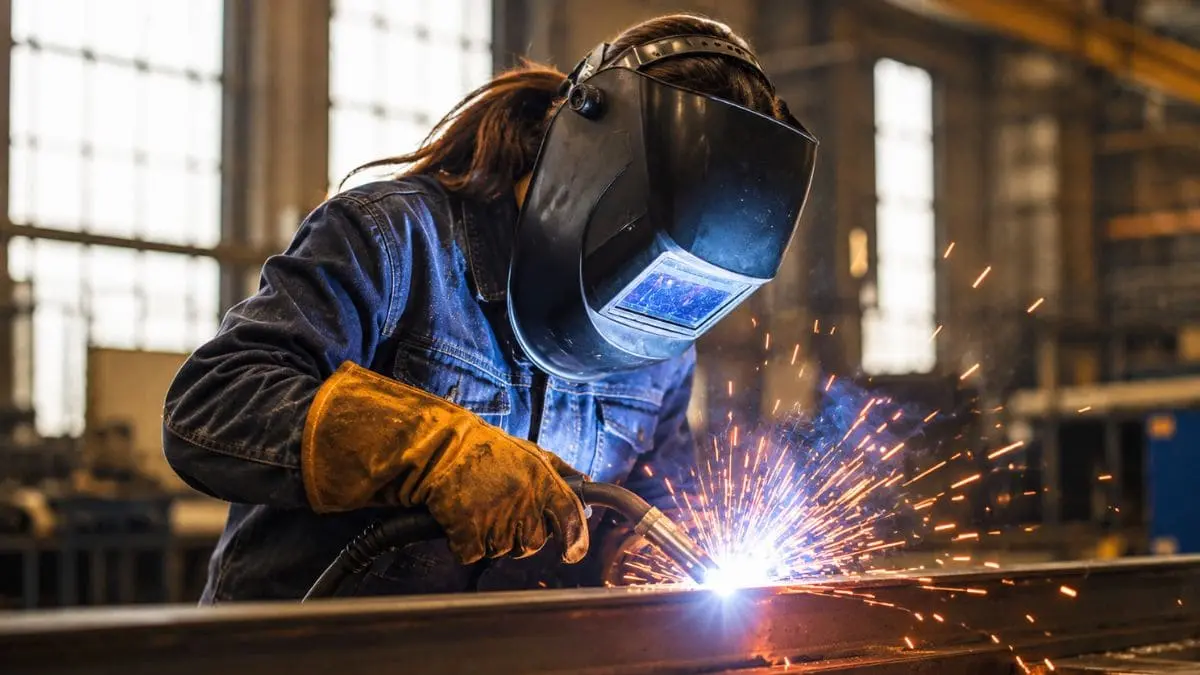
Industrial welding is a cornerstone of modern manufacturing, construction, and infrastructure development. From towering skyscrapers and bridges to automobiles, aircraft, pipelines, and heavy machinery, welding plays a vital role in creating strong, durable, and reliable metal structures. As industries continue to adopt advanced technologies and automation, welding has evolved far beyond traditional methods, offering greater precision, efficiency, and productivity.
Whether you’re a business owner, manufacturing professional, engineering student, or someone interested in industrial fabrication, understanding modern welding techniques and their applications can help you appreciate their importance in today’s industrial landscape.
Here, we explore the latest welding methods, their real-world applications, benefits, and the business value they bring.
Industrial welding is the process of joining two or more pieces of metal or thermoplastic materials using heat, pressure, or a combination of both. The objective is to create a permanent bond that is often as strong as, or stronger than, the original material.
Modern welding is used across countless industries, from mass production facilities to specialized engineering projects that require exceptional strength and precision.
Welding is essential because it enables manufacturers to build durable products while improving production efficiency and reducing assembly costs.
Key benefits include strong and permanent joints, faster manufacturing processes, reduced production costs, improved structural integrity, high reliability, compatibility with various metals, and support for automated production. These advantages make welding indispensable in industries where safety and durability are critical.
Different projects require different welding methods. Selecting the appropriate technique depends on the material, thickness, production volume, and desired finish.
MIG welding is one of the most widely used industrial welding processes.
Advantages include:
Fast welding speeds
Easy to learn
High productivity
Minimal post-weld cleanup
Suitable for steel, aluminum, and stainless steel
MIG welding is commonly used in automotive manufacturing, fabrication shops, and general manufacturing.
TIG welding produces exceptionally clean and precise welds.
Benefits include:
High-quality finishes
Excellent control
Suitable for thin materials
Strong, aesthetically pleasing welds
Ideal for stainless steel and aluminum
Industries such as aerospace, food processing equipment, and medical device manufacturing frequently rely on TIG welding.
Stick welding remains popular because of its versatility and ability to perform well in outdoor environments.
Advantages include:
Works in windy conditions
Portable equipment
Effective on rusty or dirty metals
Affordable setup costs
Suitable for heavy structural work
Construction and pipeline projects often utilize stick welding.
Flux-cored welding offers high deposition rates and excellent performance for thick materials.
Key benefits include:
High productivity
Deep weld penetration
Suitable for outdoor applications
Effective on heavy steel structures
It is widely used in shipbuilding, heavy equipment manufacturing, and structural steel fabrication.
Laser welding represents one of the most advanced welding technologies available today.
Advantages include:
Exceptional precision
Minimal heat distortion
High-speed production
Automated manufacturing compatibility
Ideal for complex components
Laser welding is commonly found in electronics, automotive production, and medical equipment manufacturing.
Automation has transformed industrial welding through robotic systems.
Robotic welding offers:
Consistent weld quality
Increased production speed
Reduced labor costs
Improved workplace safety
Continuous operation
Lower material waste
Many automotive and high-volume manufacturing facilities depend on robotic welding for efficient production.
Professional welding operations require specialized equipment for safe and efficient production.
Basic equipment includes Welding machines, Welding torches, Electrodes or filler wire, shielding gas systems, Welding helmets, Protective gloves, Flame-resistant clothing, Clamps and fixtures, grinding tools, and Ventilation systems. Proper equipment maintenance is essential for achieving consistent weld quality.
Selecting the appropriate welding technique depends on several factors:
Material type
Material thickness
Production volume
Required weld strength
Surface finish
Budget
Automation requirements
Environmental conditions
Evaluating these factors carefully helps ensure optimal performance and cost-effectiveness.
The growing demand for skilled welders and welding specialists has created numerous career opportunities.
Popular roles include:
Industrial Welder
Welding Inspector
Welding Engineer
Fabrication Technician
Robotic Welding Programmer
Quality Control Inspector
Maintenance Technician
Structural Steel Fabricator
Manufacturing Supervisor
With experience and specialized certifications, professionals can advance into leadership, engineering, or technical consulting positions.
Industrial welding remains one of the most important technologies driving modern manufacturing, infrastructure, and industrial development. From traditional methods like MIG, TIG, and Stick welding to advanced robotic and laser welding systems, today’s welding solutions offer greater precision, efficiency, and reliability than ever before. Businesses that invest in modern welding technologies benefit from improved productivity, higher product quality, reduced operating costs, and enhanced workplace safety.
As automation, artificial intelligence, and smart manufacturing continue to reshape the industry, industrial welding will remain a critical skill and a valuable business asset for companies seeking long-term growth and competitive advantage. This is a guide to industrial welding. Start an online search to learn more about industrial welding.



Read in 4 min

Read in 4 min

Read in 4 min