Read in 4 min
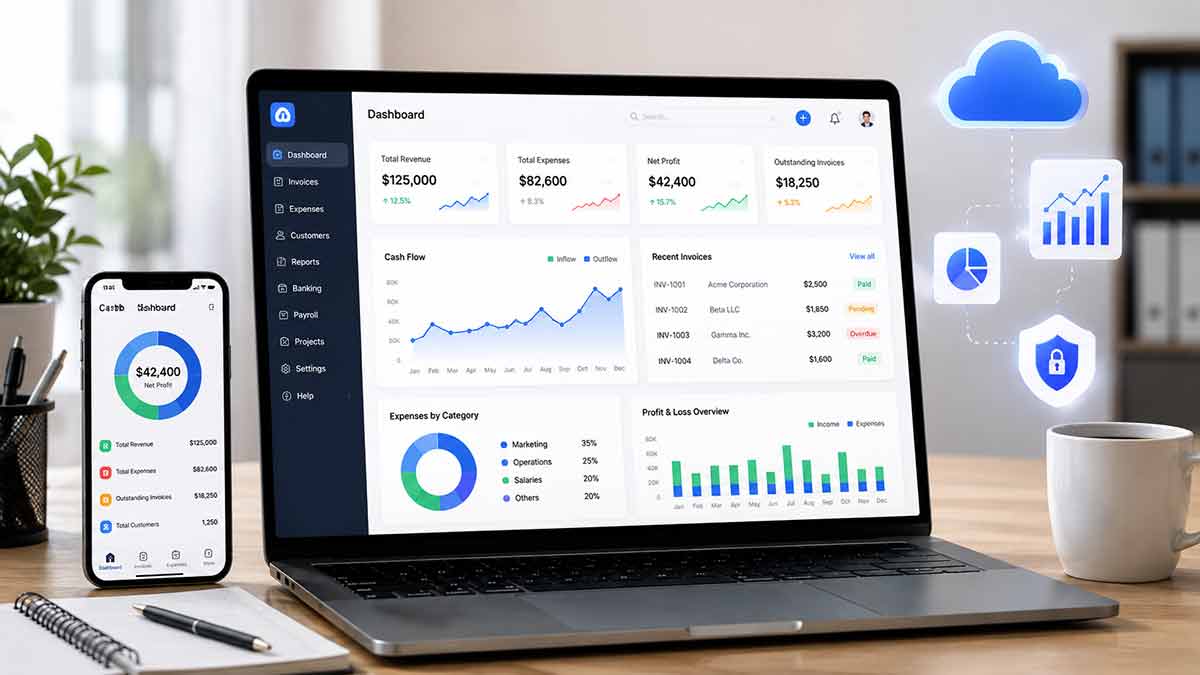
SaaS accounting software solutions are designed to manage subscription business finances. These platforms have become increasingly popular solutions for businesses to manage money, track bills, and automate bookkeeping without installing programs on local computers. Cloud access, automation, and real-time data are main features of SaaS accounting software.
This comprehensive guide explores valuable information about SaaS accounting software. Read this guide to learn more about SaaS accounting software.
SaaS accounting software is a digital tool designed to manage subscription business finances. It helps organizations track bills, manage money, and automate bookkeeping without installing programs on local computers. These tools are useful for handling recurring subscription payments and regular business reports. QuickBooks, Xero, and Sage Intacct are popular examples of SaaS accounting software.
SaaS accounting software offers a range of key features, including:
SaaS accounting software complies with standards like ASC 606 and IFRS 15 and automatically defers and recognizes subscription revenue over time. It also eliminates manual deferred-revenue schedules on spreadsheets. These approaches lead to automated revenue recognition within an organization.
These platforms track critical indicators like Monthly Recurring Revenue (MRR) and monitor Customer Acquisition Cost (CAC) and Lifetime Value (LTV). They also display real-time cash burn rate and runway.
SaaS accounting software tools have third-party integrations that allow users to connect seamlessly with payment gateways like Stripe or PayPal, sync data with CRM platforms and billing engines (e.g., Chargebee), and automate data flow to eliminate redundant manual data entry.
These tools handle recurring credit card charges and automated invoicing, manage upgrades, downgrades, add-ons, and mid-cycle prorations, and reduce involuntary churn through automated payment retries.
Here are the most common benefits of SaaS accounting software.
SaaS accounting software offers live data dashboards that show cash flow instantly. These tools track critical metrics like MRR (monthly recurring revenue) and churn without delay and make fast choices using up-to-date reports.
These tools automate recurring subscription invoices and payment reminders and manage complex revenue recognition rules, leading to automated billing and revenue recognition.
They log in securely from any location or device and provide an opportunity to share live financial records with remote team members or accountants instantly.
These tools also upgrade or change subscription tiers as transaction volumes grow and connect smoothly via APIs with CRMs, payment gateways, and payroll tools.
In addition, they add new modules without expensive hardware or server installations, making them ideal for businesses of all sizes.
There are many SaaS accounting software tools, each offering unique key features for businesses. Here are the top SaaS accounting software solutions.
Pricing: Simple Start at $38/month (1 user)
QuickBooks Online is cloud-based accounting software designed to help small and medium-sized businesses manage income, expenses, invoicing, and financial reporting. It is best for early-stage and small businesses needing general ledger management, invoicing, and easy app integrations.
Here are the common key features of this platform.
Pricing: Starts at $29 per month
When it comes to SaaS accounting software, Xero comes to mind. This is because it is cloud-based accounting software designed to help small businesses, accountants, and bookkeepers. This platform automatically automates routine financial tasks like bank reconciliation, invoicing, bill paying, and expense tracking through a centralized online dashboard.
This platform is an ideal choice for growing teams requiring collaborative cloud bookkeeping, expense tracking, and clean third-party app connections.
The most common key features of Xero include:
Price: starts at roughly $9,000 to $12,000 for a basic package
Sage Intacct is a popular SaaS accounting platform that is ideal for many businesses. It offers a range of features, allowing users to track bills, manage money, and automate bookkeeping.
Here are the key features.
Price: Starts at roughly $999/month
Oracle NetSuite is a leading, cloud-based business management platform designed to handle core tasks like accounting, inventory, enterprise resource planning (ERP), and customer relationship management (CRM). It is an ideal choice for many businesses due to its features.
Below are the common key features of Oracle NetSuite.
Price: Starts from $15 to $275 per organization per month
Zoho Books is a popular SaaS accounting platform. It is a budget-friendly choice for many businesses. It usually offers automated workflows and strong value for pre-revenue or small startup teams.
Below are the important key features of Zoho Books.
SaaS accounting software solutions help businesses automate complex revenue recognition, track subscription metrics, and handle recurring billing. Unlike traditional platforms, they match earnings to service delivery periods.
They offer a range of key features, including automated recurring invoicing, ASC 606/IFRS 15 revenue recognition compliance, real-time metrics tracking, and cloud accessibility. These tools suit both small startups and large enterprises!






Read in 4 min

Read in 4 min

Read in 4 min