
Read in 4 min
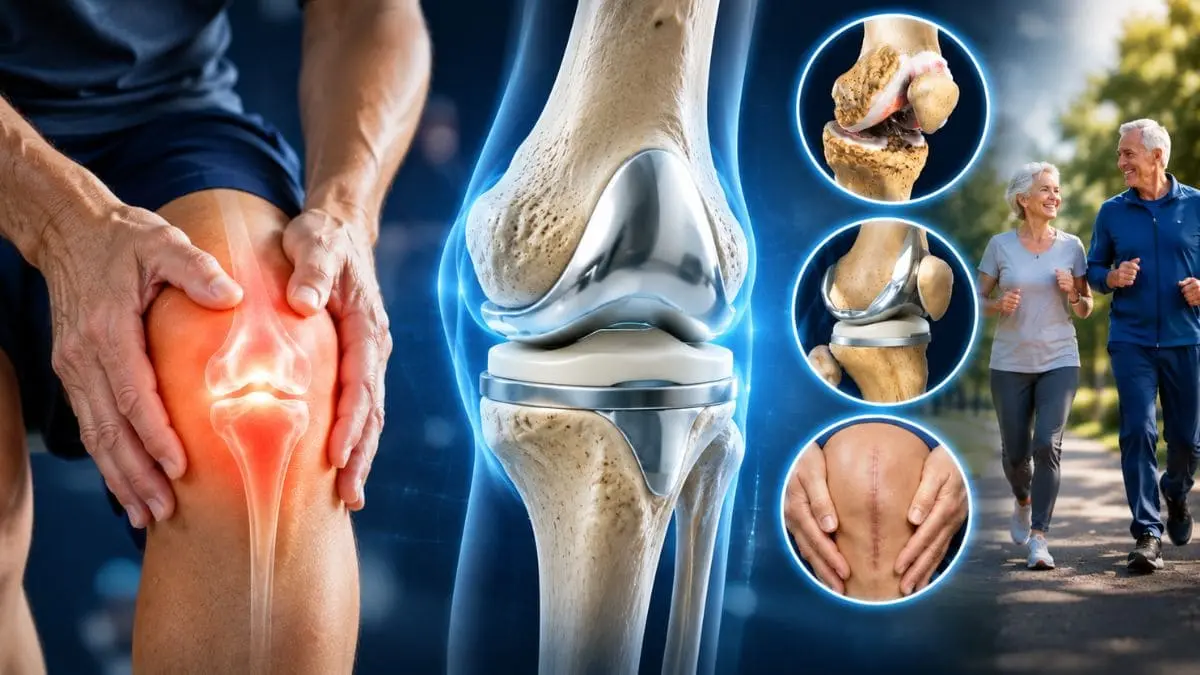
Knee pain is widely recognized as a common musculoskeletal condition that affects people of all age groups. It can develop gradually due to conditions such as osteoarthritis or occur suddenly as a result of injuries involving the ligaments, cartilage, or surrounding tissues. In many cases, a combination of natural aging, repetitive stress, excess body weight, and lifestyle factors contributes to the progression of joint pain and reduced mobility.
This blog explores information about knee replacement options. Check it out to learn about knee replacement alternatives.
Knee replacement surgery is a procedure in which damaged cartilage and bone are removed and replaced with an artificial knee joint. Although the operation has a high success rate, it remains a major surgery that requires a considerable recovery period along with physical rehabilitation.
Many people are reluctant to undergo knee replacement because of concerns about pain after surgery, temporary limitations in mobility during recovery, and the long-term durability of artificial implants. In most cases, knee implants are designed to last around 15 to 20 years, which may not be the best option for younger or highly active individuals.
Healthcare professionals also acknowledge that knee replacement is not necessary for every case of knee pain. When diagnosed early, several non-surgical treatment options can help relieve symptoms, improve joint function, and delay or even eliminate the need for surgery.
Here is a breakdown of the popular knee replacement options.
One of the most common knee replacement alternatives is Physical Therapy and Targeted Rehabilitation. It is commonly used as a first-line approach in managing knee pain. This therapy generally focuses on strengthening the muscles surrounding the knee, including the quadriceps, calf muscles, and hamstrings, which play a key role in joint stability. Modern rehabilitation programs may cover balance and coordination training, stretching routines to improve flexibility, targeted strengthening exercises, and movement analysis using digital tools.
The main goal of these programs is to reduce stress on the knee during daily activities and improve joint function.
Stem cell therapy is another alternative to knee replacement. This type of therapy generally covers the use of cells derived from the body, often from bone marrow or adipose (fat) tissue. These cells are then introduced into the knee joint with the aim of supporting biological repair processes.
Platelet-Rich Plasma (PRP) Therapy is another option for knee replacement. It has gained widespread attention as a regenerative solution for knee pain, particularly among patients who are looking to delay or avoid surgery. The procedure involves drawing a small amount of the patient’s blood, processing it to concentrate the platelets, and then injecting it into the affected knee joint. These platelets release growth factors that help reduce inflammation, accelerate healing, and support tissue repair.
This therapy is especially effective for early-stage arthritis, ligament damage, and tendon injuries where the body still can regenerate tissue. While results can vary depending on the severity of the condition, several patients experience improved mobility, reduced pain, and better joint function over time, making it a popular non-surgical option this year.
Genicular Artery Embolization (GAE) is a popular alternative for knee replacement. It is an emerging minimally invasive procedure that is gaining significant traction in the United States as an alternative to knee replacement. It usually works by selectively reducing blood flow to the inflamed areas of the knee, which helps decrease swelling, pain, and overall inflammation associated with chronic joint conditions.
Interventional radiologists perform this procedure using image-guided techniques. Also, this procedure does not require major surgery or large incisions. As a result, patients usually experience shorter recovery times and fewer complications compared to traditional surgical approaches.
Hyaluronic acid injections are a widely accepted non-surgical treatment for knee pain and remain a popular option for individuals looking to avoid surgery. These injections help restore the natural lubricating fluid within the knee joint, enhancing cushioning and reducing friction between the bones. As a result, joint movement becomes smoother, making everyday activities more comfortable.
This therapy is especially effective for people with osteoarthritis, a condition in which the knee gradually loses its natural lubrication. While the effects are temporary, many patients experience pain relief and improved joint function for several months, helping them remain active and better manage their symptoms without immediate surgical intervention.
Knee braces and orthotic devices continue to be a practical and effective non-surgical option for relieving knee pain. These supportive devices help shift body weight away from the injured or weakened areas of the knee, reducing stress on the joint and minimizing discomfort during movement. By improving joint stability and support, they can make everyday activities such as walking, standing for extended periods, and climbing stairs more comfortable and manageable.
To maintain knee health and prevent the progression of joint problems, most patients follow weight management and lifestyle changes. We know that excess body weight places additional pressure on the knee joint, which can accelerate cartilage wear and increase pain over time.
Doctors are placing greater emphasis on comprehensive lifestyle approaches that combine balanced nutrition, regular exercise, and, in some cases, medically supervised weight-loss therapies.
Arthroscopy is another knee replacement alternative. It is a technique used to diagnose and treat certain knee conditions. This surgery generally involves inserting a small camera into the joint through a minor incision, allowing visualization of internal structures. It may be used for meniscus repair or trimming, removal of loose cartilage fragments, and treatment of specific structural abnormalities.
We know that knee replacement is no longer the only path for patients dealing with chronic knee pain. These are common alternatives to knee replacement, offering effective relief without the risks and recovery associated with major surgery.
This is just a guide to knee replacement options. It is advised to check all aspects of knee replacement alternatives to make an informed decision. To learn more about knee replacement options, try an online search today!





Read in 4 min

Read in 4 min

Read in 4 min